

In a previous article, I discussed my own personal journey with the scientific explanation of the human condition as explained by Australian author and biologist, Jeremy Griffith. Having come from a religious background, when I first came across this organization, I was very impressed with what I had found but also desperate to get specific answers to questions about the Bible I had always wondered about.
Tragically though, at the time, I was discouraged from asking the specific questions I had, and so unfortunately, I could not go ahead with direct involvement as I ultimately wanted to:

Lately, the “World Transformation Movement” has changed their name to “Fix the World”, and their latest advertising campaign on YouTube refers to Jeremy Griffith as Darwin 2.0. This is a new thing for them to say publicly, and so it seems like a fitting time for me to write this article, elaborating on what I’ve already written.
Now despite my criticisms, I actually agree that Griffith is, in a sense, the “second coming of Darwin” — which, obviously, is more “tongue in cheek” than the more loaded phrase, “second coming of Christ”. Due to widespread fundamentalism that has dominated much of North American Christianity for centuries, it’s difficult to talk about the “second coming” without being misunderstood.
In fact, at one time, their organization ended up suing a fundamentalist preacher (Reverend Millikan) who defamed Griffith saying that he claimed he was the “second coming” of “Christ” (Jesus of Nazareth). Of course this was a tone-deaf thing for Millikan to claim, because in reality, what Griffith actually claims is that he is one of the very few throughout human history who is “unresigned” (a concept he himself explains). He’s of course not the “second coming” in the way that fundamentalists think about that — he’s more like the fifth or the sixth or seventh (or whatever) “coming” of a certain psychological type. What Griffith claims is that he’s in an extremely rare type of psychology (“unresigned”) who, unlike previous manifestations, has now solved the “human condition” (something pre-scientific “unresigned” people couldn’t do).
Now whether or not he actually has solved the human condition is something the reader can evaluate for themselves. My goal in this article is not to convince you of that, but rather just to give my own background of my journey through creationism, “evolution”, natural selection, social darwinism, etc — and finally, the way out of these historic false dichotomies. Because when I had first come across Griffith’s idea of “Adam Stork”, I had an even further problem of being skeptical of the idea of “evolution” or “natural selection” to begin with — something many people now, including Griffith and his organization, take for granted. So as you can see, in more ways than one, I had to “start from scratch”.
It’s been a hell of a journey.
Creationism & “Natural Selection”
In modern North American Protestantism, creationism is a common feature of the religious landscape. It is more prevalent in America than Canada, but I grew up in a part of Canada where the influence was strong. Thus, I came of age with a distrust of Darwin and “evolution”, which was characterized as “survival of the fittest” (lumped in with “social darwinism” and the atrocities of people who endorsed that during the world wars period). In fact, because of this entrenched skepticism, I never actually read On the Origin of Species, nor did I really understand “natural selection”. And for a time as a young man, I did indeed believe that the earth was something like 6,000-10,000 years old. I tended to take the creation story of Genesis literally (although I was never entirely sure).
As it turns out, though, it wasn’t Darwin himself who coined “survival of the fittest”. it was Herbert Spencer who was eager to characterize Darwin’s ideas more aggressively — Darwin only used the phrase after much pressure.
In reality, “natural selection” was about being adapted to the environment — which had more to do with the happenstance of suitability to incoming environmental shifts than it did about “fitness” or “strength” or “struggle” per se. It is technically correct to say that some organisms are more “fit” for their environment (and even “struggle” to survive and reproduce), but this word (and the phrase, “survival of the fittest”) can leave a wrong impression that “evolution” is all about “red tooth and claw” — that is, dominance. In reality, despite dominance hierarchies commonly found in nature, “fitness” is best understood as “best adapted to”. And this could imply survival of the strongest (if strength is required), but it could also imply survival of the weakest (if the given environment and its changes do not demand strength).
It’s easy to look at the apparent ruthlessness and indifference of animals in nature and conclude that such behavior is the “meaning of life”. And although of course “social darwinism” was a distortion of Darwin’s idea, modern “creationists” were very right to in their general concern about the social consequences of ideas like even in the very title of Darwin’s work:
ON
THE ORIGIN OF SPECIES
BY MEANS OF NATURAL SELECTION,
OR THE
PRESERVATION OF FAVOURED RACES IN THE STRUGGLE
FOR LIFE.
This description of “natural selection” as the “struggle for life” and “favoured races” is a bit misleading — and it was indeed historically seized upon thereafter by nationalist (fascist) and communist (even capitalist) movements all over the world. Darwin’s new idea was co-opted and distorted (“social darwinism”) by insecure tyrants eager to make themselves and their people out to be the “fittest” over others — just one more excuse for world-wide death and destruction during the world war period that Nietzsche had predicted would follow what he called “the death of God” (the decline of the dominion of Christianity and of “religion”).
This phrase, “the preservation of favoured races in the struggle for life” was included in the title mainly under the influence of John Murray (you can read about the story of the titling of the book here). This “struggle for life” had more to do with cladogenesis or horizontal evolution than it did with the spurious notion that humans should dominate each other to prove their “fitness” — but that wouldn’t stop people from misusing the idea anyway.
Indeed, growing up, I heard creationists talk about this often in their objections to “evolution” in general. They rightly pointed out that when men lose faith in God and the traditions they’ve lived by for so long, terrible things can happen throughout society. As Dostoevsky had also warned prior:
“If there is no God, everything is permitted.”
And this was not that different from Nietzsche’s “mad man” warning in his book, The Gay Science, lamenting about the danger of science “killing God”:
“God is dead! God remains dead! And we have killed him! How shall we console ourselves, the most murderous of all murderers? The holiest and the mightiest that the world has hitherto possessed, has bled to death under our knife — who will wipe the blood from us? With what water could we cleanse ourselves? What lustrums, what sacred games shall we have to devise? Is not the magnitude of this deed too great for us? Shall we not ourselves have to become Gods, merely to seem worthy of it?”
At the time of Darwin, fundamentalist literalism (similar to what I had been exposed to growing up) was common, especially among Protestants. Now in reality this view had always been a flimsy basis for faith to begin with — even the phrase “New heavens and new earth” requiries a lot of Bible context, as I discuss here. And so in a sense the Protestants had set themselves up for their own trouble (Catholics were usually not so insistent on such things). But they were right in one sense: that, after such a long time of society living with a particular view of the book of Genesis and “religion”, it was dangerous to attempt to just unravel it all in a moment and replace the “Creation” story with a “science” story instead (which, at the time, seemed to de-throne “God”).
Darwin himself, coming from this very Protestant background (he had originally planned to become an Anglican clergyman himself), felt this danger to society (a society which ultimately produced him), which is why he hesistated so long in publishing his work. Contrary to others who were delighted to see “religion” come to ruin and see science “kill God”, Darwin himself (being much more nuanced and good-hearted) was nervous about disrupting the longstanding traditions that seemed to keep society together. Indeed, the 2009 movie Creation is all about this this great sickness Darwin felt in his soul (and body) at publishing his own book and thereby disappointing so many — especially his own wife. You can watch the trailer here:
He no doubt wanted to ensure his readers that an embrace of this scientific view of “origin of species” did not mean a loss of grandeur and beauty that was commonly associated with religion (as many people no doubt would have been concerned about), as he himself said at the end of his book:
“There is grandeur in this view of life, with its several powers, having been originally breathed into a few forms or into one; and that, whilst this planet has gone cycling on according to the fixed law of gravity, from so simple a beginning endless forms most beautiful and most wonderful have been, and are being, evolved.”
But dangerous it was regardless. Nietzsche, coming of age at the time of Darwin’s publication, had referred to the “darwinian beast” in regards to the threat that “natural selection” posed to fundamentalism. But he also would have seen its rise as inevitable in the sense that 2,000 years of “Christianity” — with its insistence on what he called “the will to truth” — had ultimately created this very “crisis of faith” they were then wrestling with.
For Nietzsche, there was a time in the distant past when peoples and cultures were not so concerned with “science” and “truth” in the way modern man was/is. And for Nietzsche, it was a time of less pessimism, when people lived in the vibrant stories of their gods and myths (whether “true” or not, it didn’t matter). But when Jesus had valorized “truth” by saying of himself: “I am the truth”, this would eventually, according to Nietzsche, create societies intent on scientific “truth” — particularly, Darwin’s own England.
For Nietzsche, it was a dangerous age that mankind was entering into; a time when prior religious certainties were seen to be — maybe not so certain. Bettany Hughes did a wonderful documentary (2009) on Nietzsche and his foreboding anticipations here:
Death and Rebirth — From Ashes
Indeed, both Darwin and Nietzsche’s concerns proved well-founded. As mentioned at the beginning of this article, the rush to what Nietzsche predicted as “grand politics” would come with full force, shaking centuries-long societal stabilities through the entire world. As Jesus of Nazareth had predicted ages ago when prior orders of men come to an end (which had also come to pass in his day in AD70):
“Nation will rise against nation, and kingdom against kingdom. There will be famines and earthquakes in various places. All these are the beginning of birth pains.” (Matthew 24:7-8)
Birth pains indeed. But giving birth to what exactly? Would it be only destruction that lay ahead in the future after the collapse of old certainties and orders? For Nietzsche, this incoming catastrophe didn’t have to be all bad. He saw there was a chance for something much better to arise from the ashes, as he explains in this narrated video:
Just as Nietzsche predicted, the world did erupt in two world wars (which was really just one war with grievances carried across both). It was a brutal bloody spectacle, and the world would never be the same.
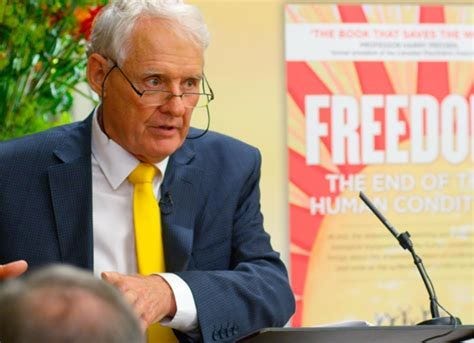
But something interesting did happen the very year that these two world wars that Nietzsche had predicted beforehand finally came to an end. Jeremy Griffith was born, who would ultimately grow up to become a successful furniture maker — then, a biologist. This obscure but good-natured upcoming author would always maintain a child-like disposition in the pursuit of the truth of what humans have long referred to as the “human condition” — the reasons for why us humans are the way we are. With the help of science that had come before him — particularly Darwin’s idea of natural selection; then Watson and Crick’s discovery of the double-helix — Griffith would offer a compelling discovery of the roots of human aggression and madness, and the reasons for so much self-loathing and near-universal human states of denial and block-out throughout the world. This idea is called “Adam Stork”.
Griffith would explain something that, in hindsight, was ridiculously simple: the idea that our “instincts” are gene-based (instead of nerve-based), and thus are “blind” — and, unlike our conscious mind, cannot be reasoned with. Griffith presents a compelling understanding of how our newly evolved conscious thinking mind would have felt criticized by our own blind instincts when we ventured out into the world to “figure things out” consciously. Our happy, “steady-as-she-goes” instincts would have been intolerant (by their very nature) of the experiments that our conscious mind (which can think) would have needed to undertake.
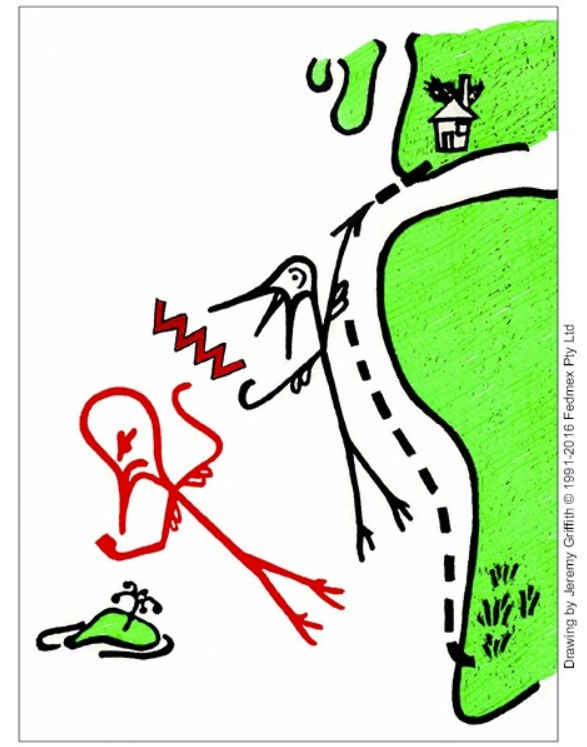
This amazing and simple idea is very powerful and relieving, and the reader is encouraged to check it out for themselves here. But as Griffith himself implies, he would not have been able to discover this idea to begin with if it hadn’t been for the discoveries that had come before — particularly, Darwin’s “natural selection”.
Just as Huxley had said regarding Darwin’s idea of natural selection, so also it seems applicable now for Griffith’s ideas in hindsight:
“How incredibly stupid of me not to have thought of that!”
Darwin 2.0?
If Griffith’s explanation of the human condition is true; if it is reasonable to say that he would not have discovered it without Darwin’s before him, it seems indeed sensible to claim that Griffith is the “second coming” of Darwin, as we discussed at the beginning of this article. For it was Darwin himself who implied that his discovery was not the end in terms of explaining human psychology, when he said:
“In the distant future I see open fields for far more important researches. Psychology will be based on a new foundation, that of the necessary acquirement of each mental power and capacity by gradation. Light will be thrown on the origin of man and his history.” (Origin of Species)
Now did Darwin explicitly anticipate understanding the “human condition” itself through biology? Maybe not (at least consciously), it’s hard to tell. But he did recognize that there was so much more yet to understand, and that his breakthrough of how organisms adapt to their environment was really just the beginning. It was actually Nietzsche who had been more explicit about how true psychology would really be the pinnacle of all scientific efforts — what he called “the Queen of the Sciences”.
If this is true, then it would indeed make sense for Darwin 2.0 to unravel the grand mysteries of human psychology and our own (as Nietzsche referred to it) “all-too-human” condition. I myself once sang (screamed, even!) 20 years ago about the fundamental struggle of all human psychology, which was to be “saved” (rather, rise above) our most fundamental problems:
As mentioned, I was originally a skeptic of Darwin and “evolution” (a word Griffith claims will now be replaced with “development”). But ironically, there was one thing that Griffith discussed that helped me “seal the deal” and fully accept that us humans had indeed “evolved” (developed):
Bonobos (pygmy chimps)
As Griffith explains, we ourselves would have had bonobo-like primate anscestors, but they have become forgotten in modern times because they no doubt confront us with too many existential questions about ourselves — questions we couldn’t answer. But now that we can understand this (through Griffith’s idea), we can look at photos and videos of these primates with new eyes:
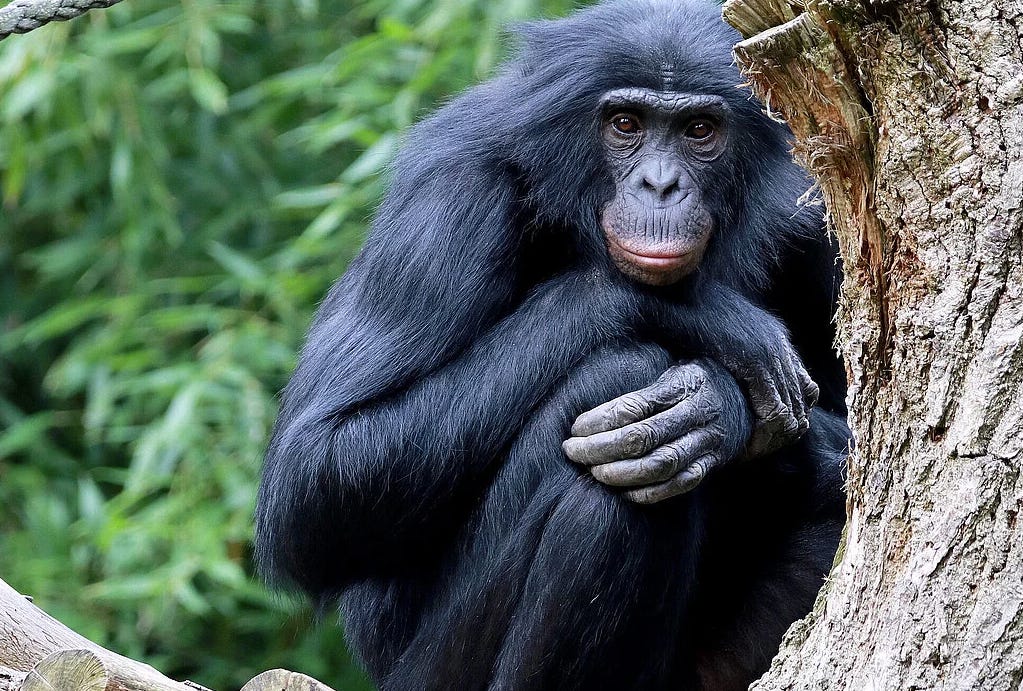
Maybe for most others, they wouldn’t need to “start from scratch” when it came to Darwin’s main idea of natural selection, but I did. But even more than all the science evidence for “evolution” or “common anscestry”, pictures and videos like the above, more than anything else, solidified the truth for me of Darwin’s original idea. And now, it’s clear that Griffith is actually Darwin 2.0 in a sense, for he has integrated/synthesized the accumulated science that has come before us — the larger truth of who we really are (our “collective soul”) that the eyes of the Bonobo seems to convey when they seem to look into your own soul.
Second Coming of “Christ”?
As mentioned, the “World Transformation Movement” had once pursued legal action for defamation against a certain Reverend Millikan for wrongly claiming that “Griffith” had claimed he was the “second coming” of Jesus of Nazareth (in the way that modern fundamentalists/literalists think about it). Ultimately, they achieved redress, and I am happy for them for that.
But there certainly is a silver lining through that all for me, which is that the Reverend is himself is really just an archetype of a certain type of person that is common in society (especially in the US and Canada), and we should expect to encounter and understand their misunderstandings — and for the few among them who will be open, explain the truth.
“Christos”
As this book explains in detail, the original name of “Jesus Christ”, or “Jesus, the Christ” was actually very offensive when people first heard those two words put side-by-side. Because it had implied that this Jesus — who had been crucified/humiliated unto death — was now called “Christ” or “Christos”. Essentially, the early Christians were claiming that a humiliated slave was now the liberator of this ancient nation of “Israel”.
But in the minds of most Jewish people, the anticipation of a coming “Christ” had to do with political liberation — not liberation of the heart or of the mind (which the “Christians” were proclaiming through their shocking message of “Christ-crucified”, 1 Corinthians 1:23).
But over hundreds of years, after the wild success of this movement, this title of “Jesus Christ” would stick, and eventually would no longer be a shock. Instead rather, a name of honor. And over thousands of years since then, it would fall into cliche, where we no longer have any sense of its original shocking implications.
And so when Millikan was himself claiming Griffith was the “second coming” of “Jesus Christ”, he was just speaking through this historical haze of prejudice and fundamentalism (no doubt not wanting to see the greater truth). The truth though is that, as discussed earlier, Griffith is claiming he is a rare psychological type, and this “reappearance” of innocence is what has “come again” — indeed, this idea of “Adam Stork” is the real “second coming of Christ” (speaking allegorically).
For if we could embrace the historical notion that Jesus was a “Christ” in the sense of not being a political liberator, but rather a liberator of the hearts and minds of men — then indeed, in a sense, we CAN see Griffith, or his ideas, as a sort of “Christ” that, unlike politics and revolutionary action, can actually liberate (and rehabilitate, as Proffesor Prosen said) the human mind. Indeed, even more fully than the Christianity that had come before.
THROUGH SMOKE
The “Christian” rock band NEEDTOBREATHE once released a song called Through Smoke, which you can listen to here:
This song has stayed with me over the last decade, because I feel like I’m one of the few who actually understand what he really means underneath it all.
The opening lyrics:
Before the truth will come to fill our eyes
The wool comes down in the form of fire
And when the answers and the truth have cut their ties
Will you still find me, will you still see me
Through smoke
Through smoke
I was born in a house in a town just like your own
I was raised to believe in the power of the unknown
When the answers and the truth take different sides
Will you still find me, will you still see me
Through smoke
Through smoke
I just love this beautiful description of what I think is a thoughtful person living amongst religious fundamentalism, yet anticipating a time when “the [so-called] answers [that were given to us in fundamentalism] and the [actual] truth will cut their ties” and “when the [so-called] answers [that were given to us] and the [actual] truth take different sides”. To me, his soul is clearly anticipating the difficulty that he himself will face when “the [actual] truth will come to fill our eyes”, and how, before then, “the wool comes down in the form of fire”.
He says he was “born in a house in a town just like your own” and he was “raised to believe in the power of the unknown”. But his soul anticipated a time when the “answers” that were given to him “take different sides” from the actual truth — and he asks of himself:
“Will you still find me? Will you still see me? Through smoke.”
In other words, will he survive the shock and the transition into the new world? Can people who have been living in such a world so long make it through? Indeed, if your soul was asking the question, I feel like you had much greater chances of getting through when the time comes.
And I personally feel that Mr. Griffith’s explanation of the human condition is the ultimate “wool coming down in the form of fire” — exposing how maybe the ways we have looked at the Bible (and ourselves) wasnn’t exactly true to the real spirit of the Bible (and of Jesus himself, who was ultimately looking towards a “new heavens and new earth”).
“Let us reason together,” says the Lord
One of my favorite Bible verses is Isaiah 1:18:
“Come now, let us reason together,”
says the LORD.
“Though your sins are like scarlet,
they shall be as white as snow;
though they are red as crimson,
they shall be like wool.” (Isaiah 1:18)
I remember Bible verses like this being used in church “evangelism” efforts to bring people into our particular brand of the faith. The idea was to “convict” people of their “sin”, in order to bring about a “repentence” or change of heart so that they could become “white as snow” and “be like wool” — by believing in Jesus and his sacrifice on the Roman cross of shame.
But it seems to me now that we can use this same passage — but in a very different way. Instead of “reasoning together” in order to “repent” and say “I was wrong”, we can now “reason together” and have our past made “white as snow” by understanding our human “upset” that arose from the inevitable “human condition” (eating from the “tree of the knowledge of good and evil” — ie., evolving consciousness).
In the religious reading of this verse, we said:
I did wrong, and I’m sorry, and I change my ways.
In this new reading of the verse, we say:
I am inevitably upset from this grand horrific journey we have all gone through — so I’m not sorry. Rather I’m proud of going through this journey. But I CAN leave it all behind.
In both scenarios, the past is left behind. But in this new reading of this “archetypal” verse, we leave it behind after gaining NEW VALUES — that is, a revaluation of the past where, instead of saying, “I feel bad about the past”, we say instead, “I am proud of having suffered through such terrible hell, for it could have been no other way”. We now revalue the past, to transform the future (and the present).
Nietzsche had anticipated this revaluation of the past in his Thus Spoke Zarathustra, when he said:
“A new will teach I to people: to choose that path which humanity has followed blindly, and to approve of it - and no longer slink aside from it, like the sick and perishing!”
Very ironically, the Bible and Zarathustra (which constantly references the Bible) now come together in the most beautiful of ways.
Will we make it — through smoke?
Many won’t, but many will. As we approach the exact 2,000 year anniversary of Jesus on the cross (2030), we may indeed be living in the most challenging and most exciting time in human history.