

My name is Jonathan, I’m from Canada, and this post has been a very long time coming. It is the winter of 2025 / 2026 as I publish this.
This post is my honest review (as far as one can do a “review”) of the World Transformation Movement, and of the writings of Australian Biologist, Jeremy Griffith, This is a review of my experience interacting with the material and some people in the original membership based in Australia.

There are many things I would like to commend to people about the WTM (now called “Fix The World”), but I certainly also have criticisms. And in this post I would like to elaborate all of this. This comes out of a deep and personal struggle of well over a decade, and it is published in good faith in the hope that others can benefit from it also, and ultimately move forward.
So — here we go!
Over 14 years ago now, I had first come across a new organization on the internet called the “World Transformation Movement” (WTM), based in Australia. They were very new at the time (at least the online presence) and there was just a small amount of people involved.
I was just in my early 30s and had come through a very difficult period throughout my 20s. Having gone through a divorce and a severe crisis of faith related to my background — and having been in a hard rock band where the themes and lyrics of our music struggled directly with the deeper problems of life — I was in quite a mess.
Looking back now, I can see that I had valiantly struggled with this problem that is now understood as the human condition. That prior struggle of mine had been helped along by my church background that I had happened to have growing up. I was lucky to have a lot of freedom in a small town on the Canadian prairies to explore different ideas when I was younger. And I was also lucky to have a father who encouraged me in that and was always gracious and kind.
But unlike others who seemed to just get on with life as young adults (starting careers, families, etc) I was left with so many burning philosophical, historical, and religious questions — things I just couldn’t let go of. And that relentless pursuit of those hard questions really ended up disrupting my normal life and career more and more, eventually even contributing to a divorce not long after I had gotten married in my early 20s.
And in my later 20s, I had written and performed hard rock songs with my band at the time, even with song titles like “Human Condition”. You can listen to it below:
Looking back now, it is obvious from listening to the songs or reading the lyrics that I was really trying to face down the hard problems of life the best that I could — and as it turns out, wrestling with the human condition is something that heavy metal artists have always done — a truly beautiful and courageous genre of music. And so, even though I was quite a mess by the time I came across the WTM website shortly after turning 30, I can see it had been a noble struggle that had previously consumed me.
In my early 20s I had gone to an evangelical Christian Bible College, but hadn’t stayed with it or finished any significant degree. I had found that I often made people uncomfortable with questions I asked about the Bible and history. Even to this day, when I speak with some people I knew back then, they confirm all this. And I carried this question-asking spirit throughout my 20s.
But after first coming across the WTM website in my early 30s, and hearing biologist Jeremy Griffith explain his idea of “instinct vs intellect”, I was floored. Having been really disoriented by my pursuits throughout the previous decade, through it all I had at least left the door open to “hear” about the human condition in case such a frank discussion of it ever came along. So I had promptly got in contact after discovering them online.

The person I had been in email correspondence with the most over the next long long while was founding member, Tony Gowing. I always found the membership of the WTM to be sincere, and they always did eventually get back to me (in our numerous email correspondence). And I think, looking back now, they were honestly trying to help me with going forward.
Tragically though — and for me, this was so difficult and paradoxical, it is difficult to put into words — I would eventually end up having severe problems in both correspondence with the WTM and my inability to let go of needing to clarify certain issues related to the religious background I had come from — specifically about the Bible and about Jesus of Nazareth. And for well over a decade now, I would sadly — painfully — end up not being able to move forward.
But all this time later — despite the immense emotional and spiritual toll the whole thing took on me — I can see it would have been a bad idea for me to “go forward” without getting the answers to the questions I was asking. Not because I’m so smart or “sound” or whatever, but just because of the fluke of my background and where I came from. Most people have more “normal” backgrounds and are naturally inclined to other more practical topics related to career and family, etc. I don’t claim that my questions are superior to others, but just that they were natural in light of where I came from.
I admit that my head had been spinning at the time because of what I had gone through the previous decade — and because I had seemed now (by finding the WTM) to have finally found answers to many questions that had previously consumed me. Over the long period of time I had been in contact with them over email, I probably had not done a good job articulating my questions — I was indeed “dazed and confused” and feeling so very alone. Also, like everyone else, I was definitely confronted by these ideas, being a resigned person just like everyone else. I must have sounded quite disjointed.
Tony Gowing and others had regularly warned me not to “over-study” the ideas, as it could be destabilizing. I always understood this warning in principle, and I wasn’t against it per se. But as is clear now well over a decade later, the questions I had were actually very basic and important — not at all in that category of “over-studying”.
And this is a major critique I have of the “World Transformation Movement” (now “Fix the World”) looking back. I feel that Mr. Griffith — although obviously a great person who has done the world an incredible service beyond belief — could have gotten his organization further along sooner (in my opinion) by elaborating these basic ideas (contrary to what those in the membership have claimed).
But I do think it is a breakthrough idea nonetheless — even now — and one of my goals here is to set the record straight as far as I can see it at this point, and to potentially help others who might be wondering similar questions about religion — if possible, to help them also leave it all behind. As Mr. Griffith has explained, the human mind is a thinking thing — it requires answers to questions. And tragically, throughout it’s evolution, it has been left to wander the world without those answers.
I sincerely wanted to go forward and leave everything behind at the time when I had come across these ideas. I genuinely considered the possibility of going ahead without answering all my questions — but I eventually came to terms with the fact that I simply couldn’t (and as I can see now, shouldn’t) let those questions go until they were answered. I was in fact (as you will see) right to persist with those particular questions. It was not “over-studying”.
The very fact that I am writing this now; and as people who know me can attest that I have been doing much better since I sorted these things questions out, is proof of the fact that resolving the major archetypes of the Bible is crucial for humanity taking its next steps.
And in this post, I am going to be discussing what I think are truths about the Bible — more specifically about Jesus of Nazareth (who we call “Jesus Christ”). I personally feel like this needs to be addressed to the wider population of Christians (Protestant, Catholic, etc.) throughout the West who will now inevitably be exposed to this science-based reinterpretation of the original Genesis narrative of the Garden of Eden.
As most people can see, especially after many years of lockdowns throughout the western world, society is falling apart. And the time has come, in my opinion, to come back to Mr. Griffith’s basic ideas, and consider them on their own merit, independent of any association with an organization or membership (legal or otherwise). It is not my goal here to encourage anyone to “join” anything or give any support to anything, but rather to just encourage the reader to consider if indeed this idea of instinct vs intellect is true or not, and if they can be helpful to others as indeed it has been helpful to me.
ADAM STORK
The place to start here is with Mr. Griffith’s breakthrough idea itself, which is the breakthrough idea of ADAM STORK.
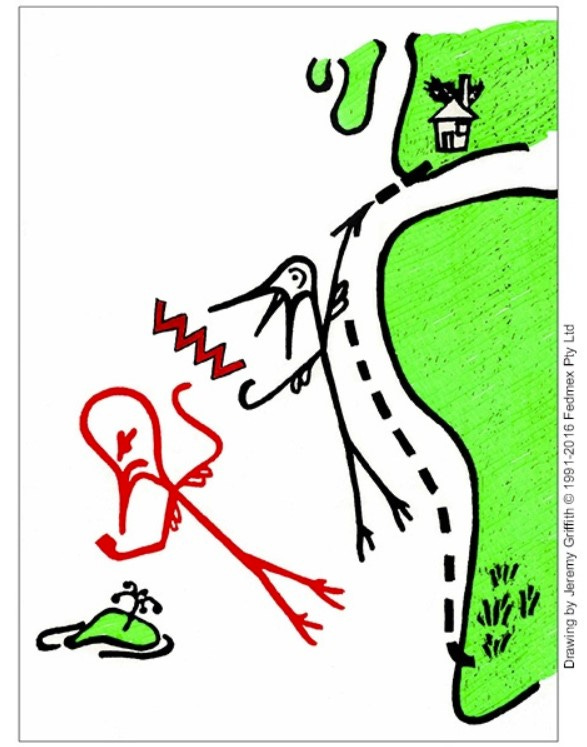
Why is it called this?
Well, as someone who comes from a background where the Bible was a constant feature, I appreciate this. Maybe unlike some, I grew up hearing the Bible story of Adam and Eve. And after witnessing all the creation/evolution debates on the internet throughout the 2000s and 2010’s — it is, in my opinion, appropriately named.
For what this idea does is basically reveal the famous Genesis narrative as — although in a sense, a “myth” — nonetheless a true “myth”: i.e. What this idea explains is that the story of Adam and Eve “eating the fruit from the tree of the knowledge of good and evil” is essentially a profound and mysterious intuition expressed allegorically of an evolutionary development that happened with us humans.
In light of this new idea, then — understanding Eden as allegory — we can see that the creationist/evolution debate was basically just two opposite literalist positions fighting themselves out over what to do with the Bible narrative. On one side, there were creationists who insisted on a literal reading of Genesis (in every aspect, including the eating the apple), and then there were what is called the “mechanist” evolutionists who insisted that Genesis was simply just a story like any other story, with no profound underlying meaning of how humans got to where we are now. As is clear to me now, both of those perspectives are wrong (and dangerous).
According to my understanding of Mr. Griffith’s explanation, the idea of Adam and Eve “eating the apple/fruit” is actually an allegory for evolving — or rather, developing — consciousness, which was associated with the evolution of our frontal lobe.
Essentially, before “eating the apple in the garden of Eden”, we were, like all other animals, driven (and largely kept safe) by our instincts who “shepherded” or guided our actions. Like modern bonobo apes who are mostly peaceful primates, our bonobo-like ancestors would not yet have engaged in the battle to master their new consciousness, and thus we lived in a time where we just happily obeyed our instincts. As the author explains (which I don’t have time here to get into the scientific explanation that he lays out), there was a time — that we allegorically refer to as “Eden” — where we happily lived in basically a utopia, guided by our loving (but blind and not “thinking”) instincts.

Contrary to what modern mechanistic scientists claim, humans actually do have loving and unselfish instincts, and we naturally do want to look after one another and our planet.
But … when we gained consciousness and started to try to “figure things out” by logic and reason, our instincts — because they were always blind and not guided by “thinking” or “wondering about things” — just simply tried to steer us back to a place of non-thinking trust in our happy instincts, that is, a place where we didn’t “think too much” (and thus, veer off the course our instincts safely kept us on).
But when we inevitably did persist in “thinking too much” (trying to figure things out) we felt our own instincts resisting this effort. And the tragic thing that happened was that our newly developed mind interpreted this resistance as criticism. And essentially, over a long enough period of time of feeling criticized, we (understandably) got really angry at the criticism and eventually lashed out at it (we attacked things that reminded us of our instincts and the happy world around us, which we felt were criticizing us).
Now our instincts didn’t actually mean to criticize us and imply we were bad or “evil” — but tragically, that is how our newly developed mind PERCEIVED the situation (and this word, perceive, is very important). We perceived we were being called “bad” — when, in fact, we actually weren’t. Thus, we developed a deep (and in reality, justified) grudge against this perceived criticism coming from our instincts (and from the world), which, as mentioned, are not insightful (i.e. they don’t “think about things” like the mind was trying to do).
In other words, we became “upset” because of this. And as Mr. Griffith explains, the rest was history in terms of the destruction that has now played out for humanity in the last 2 million (or whatever) years, waiting for a time until we could finally understand it, as we do — unbelievably — now.
Anyways, I’m likely not doing a good job of explaining this, and I highly recommend to the viewer that they check out this idea, as explained by Mr. Griffith himself on their own website.
In terms of my own review of the WTM, then, regarding this idea of instinct vs intellect, I do confirm that it is truly powerful and wonderful — not to mention, relieving. As I had thought when I had first encountered it all those years ago, I still think it is extremely simple and beautiful and powerful. Regardless of whether you agree with everything that Mr. Griffith says or with everything the WTM does, it is quite appropriate here to encourage people to actually understand that core idea first, which is really rather obvious in hindsight, and is indeed something the whole world now needs to understand.
The Genesis Narrative
But of course, this brings me to my own personal tragic struggle over a decade and a half.
From an “evolutionary” perspective — more specifically, from a natural selection perspective (as Charles Darwin explained) — this idea of “Adam Stork” made a a lot of sense to me. But as mentioned, I had grown up immersed in all the details of the actual Genesis narrative/story itself. So, because I had come from that particular background, I was always going to need to have an unpacking of those larger narrative details if I was going to have any hope at all of letting religion go in general and moving forward with supporting these ideas. In other words, it wasn’t enough for me to just understand Adam Stork (although vital), but I needed answers to questions like these:
When the narrative says that “God” said that ‘you must not eat of the knowledge of the tree of good and evil, for in the day you eat of it you will die’, who/what exactly was speaking?
When the narrative says that Eve was the one who gave Adam the apple, what was this a reference to?
It is plain to me now that the prohibition from “God” against eating the “fruit” was profound allegory on Moses part recognizing that if we actually did evolve consciousness, we were going to go through a terrible death process and lose access to our soul and our happy, all loving state of innocence that we once had in the allegorically described ‘Eden’. The “God” that is talking in the narrative is likely the “voice” of our “conscience”, which is the voice of what Mr. Griffith describes as “integrative meaning” (a larger truth which nature reminds us of).
And I can see now that the significance of Eve ‘giving the fruit to Adam’ is likely allegory for what Mr. Griffith calls “love indoctrination”. I’m not going to get into that here in this article, but you can check it out on their website.
Essentially, what I had wanted at the time was for someone to simply point out very simple (non-overstudying) points like:
“love-indoctrination is the main idea behind the allegorical idea of Eve ‘giving Adam the apple’”. In other words, it was narratively described as critical of humans for this development, when in reality, no human actually “chose” to develop consciousness, rather, it was something that just happened to us — that is, incidentally. So in this sense, we can see that the Genesis narrative is very true in the sense that it acknowledged something very serious had happened to us humans in our evolutionary past, but wrong in the sense that it blamed humans as if we “did” something “bad” to cause this “development”.
In that sense women really did “love-indoctrinate” men into “developing” consciousness, i.e. “the knowledge of good and evil” (as Griffith explains) — setting off the historic conflict of “instinct vs intellect”.
At the time, I had needed someone to take the truth that Mr. Griffith had already explained (for example, like “love-indoctrination”), and then unpack (connect it back to) the main narrative elements of the story of the Garden of Eden in Genesis.

Tragically though, at the time, Mr. Griffith’s book materials and online writings did not do this, and the membership were unable to help me with these direct questions (and strongly dissuaded me from pursuing them). And so, sadly, in a state of mind where I hadn’t been able to completely test these ideas to my own satisfaction, I was left in a state of limbo unable to confirm that where I had come from was indeed a world that had lived in the literal interpretation of something that was, in reality, the profoundest of allegories.
Being told by the WTM membership that these simple questions didn’t matter and had to be “left for the future” (regardless if they had good intentions or not, which they likely did) really messed me up. It is difficult to put into words, in fact, how much this advice really hurt and disoriented me. If I thought they had malicious intentions, I would consider it gaslighting — but I do think they meant well.
In hindsight now, it seems clear that much of the original WTM membership had likely never thought about these famous Bible verses much before — or, at the very least, never wondered what they signified (which is fine as far as that goes, it’s just a different situation). And so, of course — for them — they didn’t need that explained (it indeed looked like over-studying!). But I just happened to have come from a background where I had deeply wondered about those basic verses throughout my life.
Looking back now, I wish they had said they simply didn’t know the answers, and that there was no one available to clarify those questions, and that I would just have to be content with that or not move on as things stood. That would have at least left me in a better place where I could decide if I needed to understand those things or not. But rather, because they basically said my questions were not important (while I felt that they were extremely important in order to help me let the issue go), I felt ripped apart that I couldn’t properly address what I felt needed to be addressed. On top of other common problems that trip people up when they come across these ideas (what they call “siding with angels” or the “Mexican stand-off”, etc), I could not get my questions answered.
But of all these questions, there was an issue about “Jesus Christ” that I was really stuck on (more than anything else), and it was obvious that I would need to understand it (wouldn’t any former sincere Christian need to understand it before going forward with these ideas?). And like the other questions related to the foundational (and civilizational) Genesis narrative, I tragically was not able to get a straight answer from the people at the WTM.
However — over a decade later — the answers to my questions would finally become plain.
“Jesus died for your sins”
I grew up in a church setting where I had heard this phrase all the time. I used it a lot myself. It was what I just happened to grow up in. My background does not at all make me special — but it is my background regardless, and we all obviously must respect where we come from.
To me, this wasn’t just a side note about religion — rather it was obviously the very core of Christianity itself. Not at all just a theological distinction — rather, without it, there was no religion of Christianity at all. I had grown up in this. I heard it all the time. I certainly therefore needed to understand what it meant. St. Paul directly said the phrase many times, like in Corinthians:
“Christ died for our sins according to the scriptures” (1 Corinthians 15:3)
Essentially, what I needed was to “work backwards”. I needed to start with that most famous of phrases, and then — in light of this new idea of instinct vs intellect — explain the essence (basics) of how this idea worked out psychologically for the whole human race for the last 2,000 years.
To me, this was an obvious and basic responsibility of someone who came from such a background; that if they found out this new idea of instinct vs intellect and then they heard the claim that this idea was the fulfillment of religion itself — it would be the responsible thing to explain “Jesus died for your sin” specifically. This would obviously help formerly religious people like me let it all go, so we can all live in a new world where we no longer need Jesus to “die for your sins”.
So what did it mean?
You see, Mr. Griffith talks about this idea called “resignation” (a psychologically historic event that virtually all humans have undergone between the age of 13-15), and I actually believe him when he says that he himself is unresigned, and that the vast majority of humanity is resigned (just as I too am resigned). He explains that, throughout all of recorded human history, there has only been a handful of people who have been unresigned (Moses, Plato, Jesus, etc).
And so naturally, if both Jesus of Nazareth was an unresigned human, and Mr. Griffith also is unresigned, I naturally wanted to hear from Mr. Griffith himself the underlying meaning of what it meant that Jesus submitted himself to “dying for our sins”.
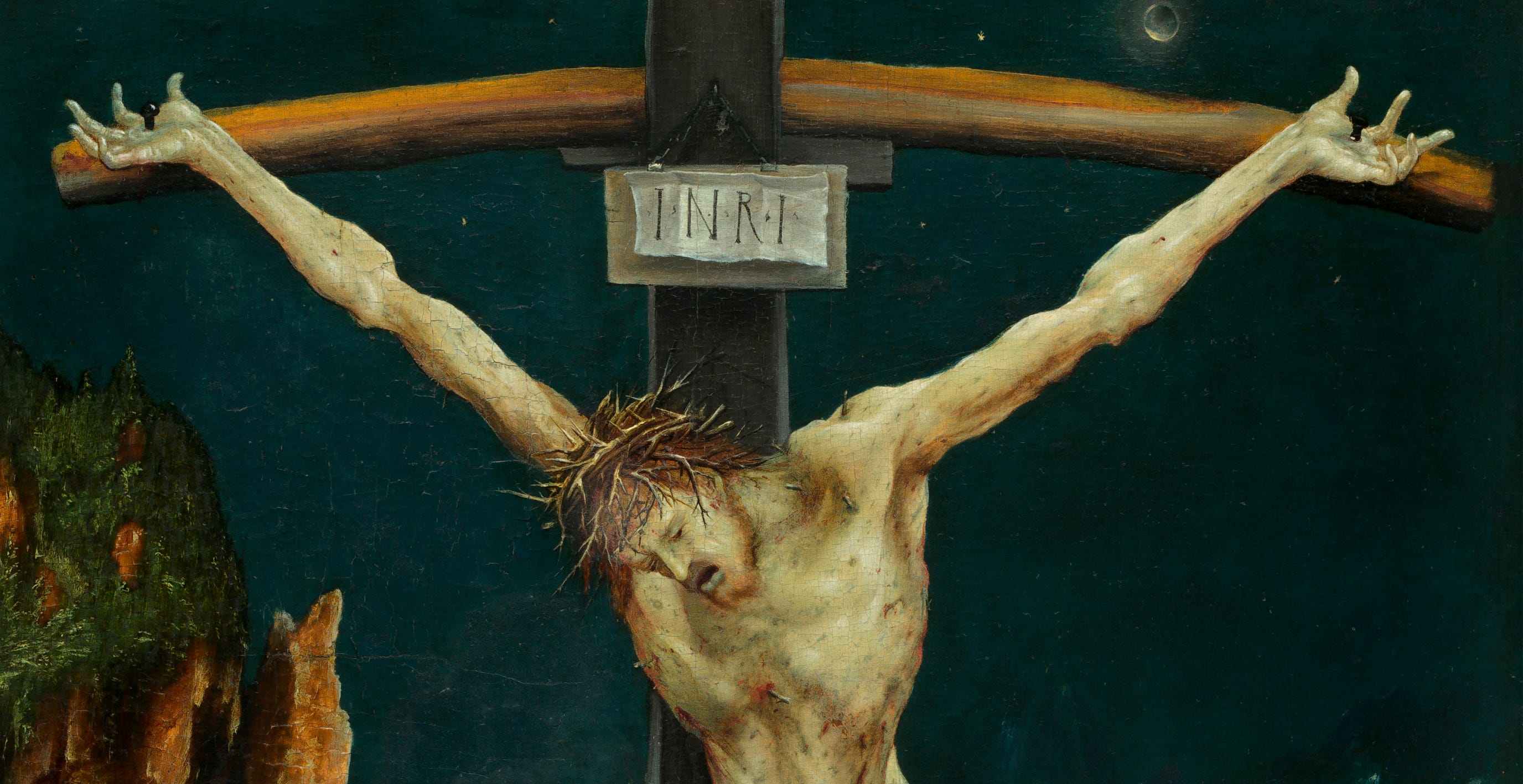
Now if I had grown up in a science background, I wouldn’t have needed to know what that religious phrase meant — but because I did grow up in that background, I did need to understand what that meant. This is not rocket science.
To me, it was just basic, and more than reasonable. Not only was it not “over-studying”, but a responsibility of being a human who came out of such a background. Again, as Griffith himself said, the human mind is a thinking thing! And if religion is really now fulfilled, then I should be able to see how it is fulfilled.
Tragically though, I felt like the WTM membership were belittling and dismissing the question as unnecessary — almost as if they were completely unfamiliar with the entire message of what is now called “The New Testament”. It was like they were unaware that St. Paul had wrote a whole series of letters, which are now the most famous in all of history. Talk about perplexing… what was going on?
And so there I was — blown away by the idea of instinct and intellect, and utterly flummoxed by the membership’s dismissal of basic questions regarding religion.
Resorting to Deception
I would tragically have to wait over a decade (well into covid) before I would get the answers to the questions that I had always needed.
But at one point during that decade, I had (in my desperation) foolishly resorted to deception, posing as someone else in emails to the WTM, asking the very same question (about what “Jesus died for your sins” meant), desperate to get an answer from them — thinking (foolishly) that maybe they didn’t want to tell me because they thought it would destabilize me or something? … but hey, maybe they would tell someone else!… It was foolish and desperate thinking on my part, but it does illustrate just how desperate I was to get the answers I needed.
But as it turns out — despite all this foolishness on my part — the answer to my questions that I had pursued even to the point of deception, is actually directly related to the truth of the new way that things can be now for humanity, since Adam Stork is now finally explained and available for humanity. Yes, far from just a theological sidenote, what “Jesus died for your sins” means actually is a sort of forerunner to the transformation that all humans can now have.
Friedrich Nietzsche
After understanding the idea of Adam Stork all those years ago — but being stuck with unanswered questions unable to go forward — for a very long time I was stranded. But during this terrible exile of misunderstanding, I would discover two other authors that would be of tremendous help to me. But along the way I would not forget the WTM and the idea of Adam Stork that had always made sense to me.
The first author was someone I got into because Mr. Griffith himself had mentioned him in his videos on their website: the German philosopher, Friedrich Nietzsche.
Nietzsche’s works were a godsend to me, and I’m so grateful for them and that Mr. Griffith had mentioned him. Specifically, out of all of Nietzsche’s works, Griffith mentioned his Thus Spoke Zarathustra - A Book for All and None.

Mr. Griffith’s claim was that the real underlying reason Nietzsche gave it that title was because that, before the explanation of the human condition was found, Nietzsche’s Zarathustra was a book for “none” (and indeed, it was generally rejected at first) — but that after the understanding the analogy of Adam Stork, Nietzsche’s book would then be a book for all.
Now whether or not this claim is exactly true or not about the title, I myself must admit that, indeed, Nietzsche’s writings became much more comprehensible to me after understanding the idea of Adam Stork. It is probably the case that the sort of “deaf effect” that the WTM speak of regarding being unable to understand Griffith, is likely also true to one degree or another with understanding Nietzsche.
I myself though was SO appreciative for “Zarathustra”, that I really dove into it, and even started narrating the book and posting those narrations online. I did this periodically for many years.
But over that long period, I started to notice something about Zarathustra, and that is that it was constantly referencing/bouncing off of the Bible. And particularly the New Testament. It seems quite apparent now that Thus Spoke Zarathustra is, in fact, in constant dialogue and struggle with the New Testament of the Bible and with the words and teachings of Jesus of Nazareth himself (in the gospels).
Nietzsche demonstrates in his writings a great respect for Jesus, but also an antagonism with him as a sort of grand opponent. And this struggle seems a regular theme throughout the whole book.
And of course, for someone like me, who had so much desperation trying to understand the underlying psychological meaning of the basics of the message of the Bible (like the aforementioned “Jesus died for your sins”), Nietzsche was invaluable. Quite paradoxically, even though the WTM likely would have advised against me getting into Nietzsche, it was ultimately because of Griffith mentioning Nietzsche in the first place (who I then really got into) that helped me become a more stable and calm person, validating the questions I always had as legitimate.
Historian Tom Holland
But it would be only during Covid that I would finally discover another author that was invaluable to me. It was historian Tom Holland, and particularly his very important book, Dominion - How the Christian Revolution Remade the World. This was also a godsend to me.

And thus, through both of these authors, Nietzsche and Holland, my decade+ long struggle to answer the most basic questions of the underlying psychological meaning of the message of Christianity was finally over.
What does it mean then?
When Christians were originally spreading the gospel (i.e. “good news”) of believing in Jesus and “salvation from sin”, what was the underlying meaning there that indeed “remade the world” (as Holland describes it)? How did Jesus “die for our sins”? Well, as it turns out, the answer is simple.
The main thing to realize first was that, historically — unlike our modern culture — ancient cultures/societies were collectivist honor/shame societies. So avoiding public shame and gaining public honor (before gods and before men) was the everyday obsession of virtually everyone.
No doubt Mr. Griffith, if he was to hear this (he’s a biologist, not a historian), would say that this obsession with avoiding shame was a product of the human condition. In the same way that we “feel guilty” in our day as a result of the human condition (which, is an individualist internalization of shame transformed into guilt), so also in ancient times they did too, except they experienced honor and shame publicly (while us modern westerners are more private about our feelings of shame in our culture).
As Griffith explains about Jesus, he was an “unresigned” person (a “prophet”), who didn’t need to block out any of the hard realities of the human condition when he was young (like the rest of us do). And thus, as an adult, Jesus walked around without feeling or knowing any personal shame or guilt about anything. And he could freely point out the hypocrisies and shame of everyone else, knowing he himself was free of it.
And as Griffith mentions, Jesus made other people feel insecure when he did point that out. This carefree and non-political nature of Jesus really bothered others (particularly the hypocritical religious elites) and made them want him to feel/experience the same shame that they felt/experienced—a shame that all the “Israelites” (a people that Jesus belonged to — he was a “Jew”) had historically always tried to avoid. This ancient nation of “Israel” had been established by Moses (another unresigned person) on the basis of blessings for those who followed the laws of Moses, and curses for those who didn’t. So the ancient terror of shame was particularly embedded in Israelite culture (modern Asian cultures of “saving face” honor/shame culture is a good window into how ancient people thought).

Essentially, deep underneath it all, people felt humiliation about their own lives, and this Jesus seemed to feel NO humiliation. And this aroused envy and anger towards Jesus in those who did feel shame deep down, and then they wanted him to feel what they felt because of how they had brought that out of them (and exposed their corruption).
And so what would you do if you wanted someone to feel the shame that you feel deep down?? Well, you would do what many societies have done for ages: you would drag that person through a humiliation ritual — that is, you would ritually humiliate them. And if you could, you would humiliate them to the point of the death.
And THAT is what crucifixion was: the ultimate humiliation torture chamber of death. If you could get anyone to suffer such humiliation, you could very well get revenge on that person who didn’t seem to feel/experience any humiliation like you do underneath it all (and make yourself look better by contrast).
It was a widespread belief among the Jews that if you got crucified, you were under God’s curse — that is, humiliated. Ancient people were fatalists, and so if you died in such a state, you were considered a worthless and cursed person — the punishment itself was condemnation for the victim, and vindication for those who were looking on.
This is why the Bible famously says:
“Cursed is he who is hung on a tree.”
Thus this was a very effective way to get back at Jesus, and make him feel/experience what everyone else naturally was trying to suppress or avoid.
But importantly also, it was a widespread belief at that time that if you got crucified, it was the shameful nature of the crucifixion itself that would make resurrection impossible. They did think back then that getting raised from the dead (something thought to have happened from time to time) was a sign of your honorable status during your lifetime, and was considered to happen to only men considered very noble (like the Caesars). But it was considered impossible for someone to rise from physical death after being humiliated on a cross in such a way.
But Jesus knew ahead of time that people would need him after he was gone (as Griffith himself briefly mentions), and so they claimed Jesus was risen from the dead — even after such a death of humiliation. But to rise from death after humiliation was to imply the humiliation status of the crucified person had been reversed, and that the person was now — honorable.
When people claimed that Jesus had physically risen from a death of shame, they were claiming that the shame that such a death implied, had been flipped to honor —they said that Jesus was now in heaven “at the right hand of the father” (the place of honor).
And their message was that if you believe in Jesus ascended into heaven (shame flipped to honor), YOU TOO could feel your own shame turned into honor, and thus feel relief from your own sense of guilt and shame when you lived your life for what Jesus stood for (even to the point of being willing to die for him).
You see, contrary to what some members of the WTM many claim, the way that Jesus died actually mattered a lot for the establishing of Christianity, because it was a society all about public honor and shame, and seeking to flip that shame back to honor.
Honor/Shame SWAP
So what does “Jesus died for your sins” mean?
Answer:
He “switched places” with us.
Jesus was willing to suffer a shameful fate he didn’t deserve, so that we could then (afterwards) raise him from the dead to a place of honor — ie, he provided a way for us to be “raised with him” out of our own shame to that place of honor with him.
This is why St. Paul wrote in Colossians:
“He forgave us all our sins, having canceled the charge of our legal indebtedness, which stood against us and condemned us; he has taken it away, nailing it to the cross. And having disarmed the powers and authorities, he made a public spectacle of them, triumphing over them by the cross.” (Colossians 2:13-15)
This “legal indebtedness” was a reference to the shame/guilt felt or experienced by those who lived under the “duality” of “blessings and curses” (which had always spoke to the underlying problem of “good and evil”) from the Torah as Moses described (elaborately explained in Exodus and other places). According to Paul, this duality of good and evil “stood against us and condemned us”. For the Israelites in particular (because they only believed in one God), this “condemnation” (duality) was felt more deeply — a reality St. Paul (who was called “Saul” before his conversion) would have known very well.
But if we could convince ourselves that Jesus had literally risen from the dead after being humiliated (just killing him wasn’t enough — it had to be a death of shame, a shame that we also felt), that would imply that the shame of crucifixion had been reversed. And if the shame of Jesus on the cross could be reversed (something previously thought to be impossible), then our shame could be reversed as well! (when we decided to live for this Jesus, publicly). This is why St. Paul also wrote in the same book:
“Since, then, you have been raised with Christ, set your hearts on things above, where Christ is seated at the right hand of God.” (Colossians 3:1)
This “raised with Christ” was a reference to being raised from the psychological mire of guilt and shame. When we decided to live for Jesus, we felt all our guilt and shame disappear, and thus, we felt relieved. This feeling of relief and liberation was what St Paul referred to as “salvation”.
Essentially, Jesus offered us this method of feeling better about ourselves to buy us a lot of time until we could get to a point where we didn’t need this “honor/shame swap” anymore, and could actually understand why we weren’t bad to begin with (as the “Adam Stork” analogy now explains). Thus, Jesus submitted to the humiliation of crucifixion, when in reality he was the least deserving of it (as opposed to those crucified on either side of him who were criminals, one of which admitted he deserved his fate, thus sought to be saved by this Jesus as he died with him).
And really, the shock of the whole ordeal (that an innocent could be subject to such a horrific fate to begin with) helped us remember Jesus and what he stood for, and thus we could live for him and his memory (and the idea that he was raised back from the dead to a place of life and honor), and by doing so, we felt liberated and made whole again ourselves (guilt and shame were lifted and abolished).
And how was this sentiment expressed publicly? It was the phrase:
Jesus is Lord!
The idea that a previously humiliated “son of god” could be raised to honor (lordship), and that we could be raised with him from shame to honor, was deeply shocking and offensive in the society in which it was born. But if you were willing to risk such a declaration, you yourself would feel liberated (“saved”). Essentially, what Jesus accomplished for humanity was a profound psychological effect, and it altered history forever.
BUT NOW we can understand this basic idea of instinct vs intellect in order to abolish guilt and shame forever, and we no longer need to ritually humiliate any unresigned (innocent) person anymore just to feel better about ourselves.
WHAT I’VE JUST DESCRIBED ABOVE is the obvious answer to the burning questions I had from a decade and a half ago. But even to this day, members of the WTM (particularly it was Sally Edgar on the Facebook WTM page the last time that I was in contact with them) are still claiming that the way Jesus died didn’t matter at all, but that however Jesus happened to die would become the symbol of the religion of Christianity. This absurd denigration and hand-waving away of the whole message of the entire New Testament is obviously absurd, dangerous, and destructive — obviously preventing other religious people from going forward with these ideas. I had a sense of this when I first digested Mr. Griffith’s amazing writings and was in contact with the original membership, but tragically, I couldn’t put it into words at the time.
But as you can see in this article, I can now.
The truth is that Jesus consciously chose to submit to a particular type of death — a death of shame. He did this in the hope that this “honor/shame swap” (him being put in the very place that we ourselves feel we deserve) would help us not feel shame anymore ourselves (in contrast) — thus the obvious meaning of the phrase:
“Jesus died for your sins”.
A truly amazing thing that Jesus of Nazareth did for all humanity.
This all became quite clear to me during Covid, and although it was quite late, I was grateful (relieved) I understood it regardless.
But by this time, it had been such a long, drawn out struggle to understand, and I previously had quite the tumultuous email exchanges with members of the WTM over many years, that it had become too late then to go back to them and say that now I can see how this does indeed fulfill religion, as Jeremy explained.
Tragically, they likely would still say to me now that all these things I’m talking about here don’t matter, which is of course absurd. And obviously I can’t be in direct association with such people who denigrate such things, even though I have tried — even lately.
So what do I do? Well, I still want to support these ideas of instinct vs intellect because they are quite obviously desperately needed by the world, and what humanity has been working towards for eons.
And I personally feel that there is meaning in my struggle. In the same way that St. Paul and John helped the Jews of their day understand and properly cross over to Christianity (from Judaism) — that is, they helped them see that Christianity was a natural outflow and fulfillment of Judaism — I feel personally it is my responsibility to help Christians understand how this idea of instinct vs. intellect is the fulfillment of their own Christian faith.
Reverend Millikan
But there is something important I feel I should talk about here, which is the early days of the WTM, and how they had a lawsuit against a fundamentalist Christian minister by the name of Reverend Millikan (sp?). This minister had very deceitfully claimed at the time that he wanted to do a documentary on the WTM organization, but in the end he just made a hit piece that misrepresented the organization and aimed to publicly discredit them.
This was of course a terrible thing for him to do, and I do not at all agree with what Millikan did or said. In fact, such a reverend reminds me of the Pharisees in the New Testament.
But one of the claims of Reverend Millikan was that Jeremy Griffith was claiming that he was the “second coming of Christ”, which was a deceitful (and tone-deaf, really) misrepresentation. And so the WTM at the time ended up launching a defamation lawsuit against him, and they actually won their lawsuit, and was able to achieve redress.
I am very happy for them that they were able set the record straight. But that whole ordeal with Millikan does serve as a valuable example of how, in my opinion, the WTM could do a better job in explanation.
“Second Coming” as Allegory
What is obvious to me now is that Millikan was a type of “fundamentalist” (a biblical literalist) who took a very strict reading of the meaning of the idea of the “second coming” of Christ. Based on the imagery of the Bible, he probably took literally the words of Jesus when he said things like “you will see the son of man coming on the clouds of heaven”. Many modern evangelical Christian types read these verses hyper-literally to mean that we should see Jesus in the literal clouds.
And this was likely also the view of Millikan (although I cannot confirm), and so he gleamed from Griffith’s material that Griffith was claiming that he was somehow the second appearance of the original, literal Jesus of Nazareth who had come to save everyone. Of course though, this is a misunderstanding (maybe intentional, I don’t know) on Millikan’s part.
But this confusion, in my opinion, is made worse from two different things:
The nature of fundamentalism/literalism itself. I too grew up in a similar background where many people took much of the words of Christ too literally, not recognizing the allegorical meaning of those words. Indeed the metaphorical way that they were used in what is called the “Old Testament” helps us understand what Jesus meant and “coming on the clouds of heaven” particularly had more to do with vindication and being proven true and right, instead of literally being seen in the literal clouds.
Mr. Griffith himself, not being a historian or a Bible scholar, is not familiar with how this imagery was used in the Old Testament, and so in his writings does not explain any of this, thus leaving the door open for misunderstandings from (likely) malicious fundamentalists, like Reverend Millikan.
Now again, I do not support Millikan and what he did. But one thing that has become plain to me now is that the WTM did feed misunderstanding by not articulating exactly what it was that Griffith meant.
The truth is that Griffith teaches that there have only been a handful of unresigned people in the last many thousands of years, and that (like Jesus of Nazareth) Griffith himself is also unresigned (and Griffith explains the process of resignation which you can read from him). Is Griffith claiming to be a god-man or the second appearance of the literal person Jesus of Nazareth? No, of course not.
The direct and more clear point is that Griffith is basically saying that the “second coming” is an allegory for the re-appearance of another unresigned person (of which there has been so few in history).
In other words, Jeremy Griffith is the “second coming” (or the third or fourth or fifth or whatever, coming / appearance) of someone who didn’t need to psychologically resign. He is indeed another occurrence/appearance/”coming” of this very rare psychological state of mind. He’s not a god-man. He’s not coming in the literal clouds (although I do believe he will be vindicated, just as Jesus of Nazareth was).
Conclusion
It was so emotionally difficult (beyond words I can state here actually) to not have my questions answered all those years ago, and I paid a terrible price for that personally.
And as things stand now (as I understand it, but I am always open to being corrected), the membership at the “official” WTM does not recognize the need or legitimacy of these questions (and answers) that I have been discussing here (as far as I can perceive the situation), and so of course, I cannot go forward in direct association with them. It should be obvious to the reader the truth of what I’m saying here when one understands the historical humiliation nature of crucifixion, and thus my predicament.
But what I can do is still support these ideas in my own small way by directing people to Griffith’s material, while also making available all the information that I have just unpacked here — in this very testimonial — which is why I have made this article, and also set up this website: newvalues.substack.com. My intention here has been to (finally) fully address the last decade+ of my struggle with these ideas (which I will address further on this substack).
When St. Paul was spreading Christianity (his message of what he called “Christ-crucified”), even though most of his own people, the Jews, would end up not agreeing with him, a minority of them would understand his message and appreciate it, and thus be transformed by living for Jesus as risen from his death of shame. And Paul said that his priority was “first to the Jews, then to the Gentiles” (Romans 1:16).
He wanted his fellow Jews to properly understand how this Jesus (his shameful death and resurrection back to honor, and the “religion” associated with this) was the natural fulfillment of Judaism — even if most of them would not come with him.
Similarly, I want my fellow Christians (of all different stripes) throughout “Christendom” (what is now called “The West”) to understand how this idea called “Adam Stork” is the fulfillment of their faith, and that the “second coming of Christ” is a metaphor or allegory for a time — which has now come — when we would all understand the human condition, and no longer need an unresigned man like Jesus to suffer a humiliation-ritual crucifixion in order to make us feel better (and burn his memory into our minds with the shock of his fate so we could live for his memory after the fact).
This is why I have set up this substack, and I strongly encourage everyone to check out the idea of “Adam Stork”, as explained by Australian biologist, Jeremy Griffith.
The hour is late.
So let’s go.
-Jonathan E Thomas
Perhaps you are un-resigned.